Read/Download
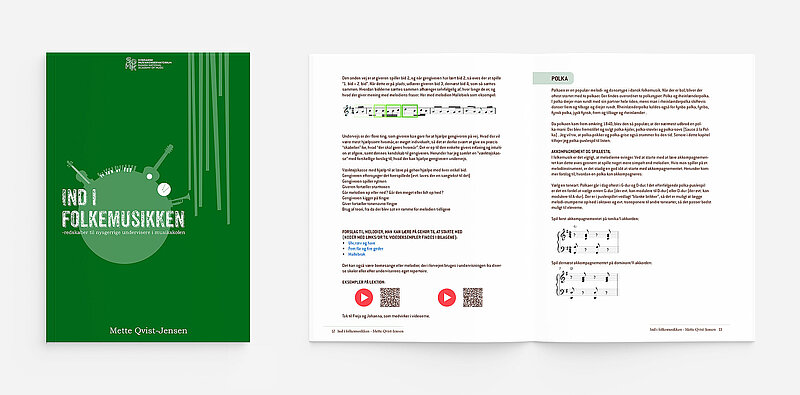
About the project
The aim of the projects is to convey folk music playing styles, didactics and folk music practices to cultural school teachers who are not already familiar with these, and to give them concrete tools and material to pass this on to their students. This enables more students to become acquainted with the living folk music tradition and makes it easier for them to participate in folk music contexts.
"I'm currently experiencing a growing interest in folk music among musicians and educators. Several of my colleagues at various cultural schools ask me for material about the genre or melodies that they can play with their students. Time and time again I have been annoyed that I have "only" given them a melody, referred them to a collection of sheet music or suggested a concert or festival. I wanted to show them all the "around" tunes that I think is great about folk music and the environment around it! Hence this Pedagogical Research project, where I try to communicate the approaches, methods and values associated with folk music to educators with other musical backgrounds, and at the same time give concrete suggestions on how to work with folk music in music schools. The selection of topics in this project is based on interviews with educators and management from music schools, members of the FolkCamp team, and the leader of the FolkBaltica Ensemble.
The sections in this booklet are all central to the understanding of Danish and Nordic folk music and are generally divided into two groups: Sections where I have written down tacit knowledge about working methods and concrete approaches that I have seen used in the folk music environment ("Listening games and oral transmission" and "We are more than one - what do I do?"), and sections where I make my own suggestions on how values, working methods and background knowledge about folk music can be used in culture schools today ("Polka puzzle", "Folk music is alive" and "The connection between music and dance"). In the latter group, I work especially with creating shortcuts to experiences so that musicians, music school students and educators get a taste of what folk music can do without having any background knowledge or preconceptions. At the same time, you also acquire characteristics and knowledge about the genre. I also give a personal explanation of what folk music is for me in the section "What is folk music?". Common to all the sections is the desire to make it even easier for more people to participate in folk music communities and the hope that music schools will benefit from all the good that folk music can contribute.
In addition to the primary purpose of the project, it is also my hope that it can contribute to a conversation and discussion within the genre about teaching and communication. In this project, I have made both choices and simplifications (e.g. I do not go deeper into voice acting and dirt playing), but I hope that others or myself will eventually address this. My reflections on the project and information on methodology can be found below.
I hope you enjoy this booklet, but remember that folk music should first and foremost be experienced with others in real life!"
Mette Qvist-Jensen
Read/Download